• Report Animal Cruelty
  • 877-548-6263

Animal Protection New Mexico

40 years of positive change.

Menu
  • What We Do
    • Challenging Animal Cruelty
      • Animal Cruelty Helpline
      • Recognizing and Reporting Animal Cruelty
      • Animal Hoarding
      • Veterinary / Kennel Complaints
      • Law Enforcement Training
      • Animal Laws
    • Building Humane Communities
      • New Mexico Spay/Neuter Assistance Fund FAQs
      • Animal Welfare Program Fund
      • Disaster Resources
      • 2018 NM Shelter Survey
      • Spay/Neuter Resources
      • Spay/Neuter Assistance
      • Companion Animal Rescue Effort (CARE)
      • Train. Don’t Chain.®
      • Humane Communities
      • Shelter Savvy
      • Disaster Preparedness
      • New Mexico Animal Resources Guide
    • Protecting Horses, Donkeys and Mules
      • Equine Protection Fund: Emergency Feed Assistance and Other Help
      • Equine Care Guide
      • Say No to Horse Slaughter
      • Equine Shelter Rescue Fund & Tax Checkoff
    • Teaching Compassion for Animals
      • The Animal Connection
      • Dissection Choice
    • Promoting Coexistence with Wildlife
      • New Mexico is Bear Country
      • Roxy’s Law prohibits traps, snares, and poisons on New Mexico public lands
      • Cougar Smart New Mexico
      • Beavers Belong!
      • Living with Prairie Dogs
      • What to do with orphaned, sick or injured wildlife
      • USDA Wildlife Services
    • Changing Laws to Change Lives
      • Animal Protection Voters
    • Protecting Animals Used in Science
      • Securing Sanctuary for Chimpanzees
      • Dissection Choice
    • Promoting Plant-Based Eating
      • Why Plant-Based Eating?
      • Plant-Based Recipes
      • Farmed Animal Fact Sheets
      • Plant-Based Eating Blog
      • Educated Choices Program
      • Milk in Schools Report
      • Informe Sobre La Leche En Las Escuelas
    • Honoring Champions for Animals
      • 2015 Milagro Award Winners
      • Past Milagro Award Winners
    • Close
  • Publications
      • Making Tracks - November 2026Making Tracks Magazine
      • Animal Protection New Mexico 2025 Annual ReportAnnual Report
      • New Mexico Animal Resources GuideNew Mexico Animal Resources Guide
    •  
      • Animal Services in New Mexico - A Needs Assessment for the North Central Region 2026Animal Services Needs Assessment
    • Close
  • Get Involved
    • Get Involved
      • Jobs
      • Shop
      • Donate to Help Animals
      • Sign Up for eAlerts
      • Contact Us
    • Close
  • Donate
You are here: Home / Blog / From Complaint to Accountability: The Work of APNM’s Animal Cruelty Helpline

From Complaint to Accountability: The Work of APNM’s Animal Cruelty Helpline

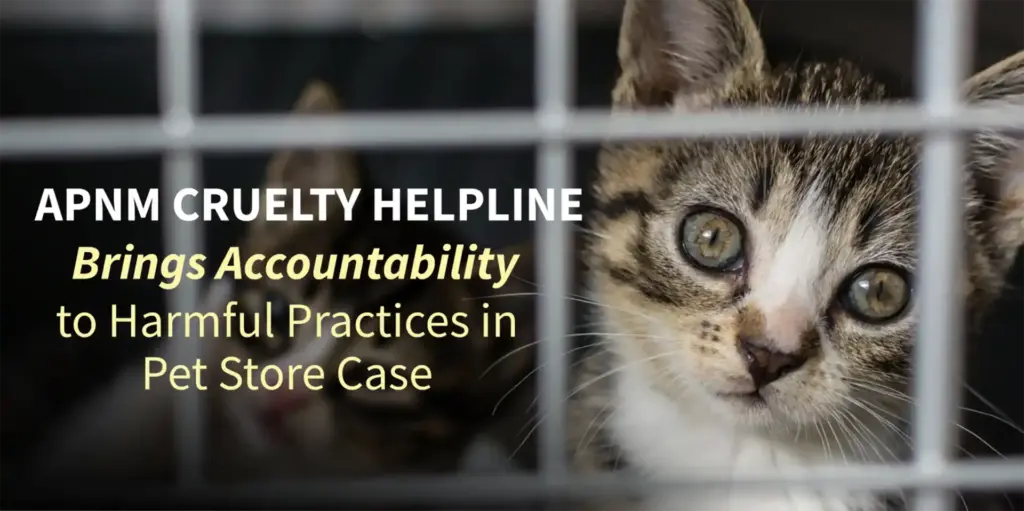
From Complaint to Accountability - The Work of APNM’s Animal Cruelty Helpline

When people or businesses engage in irresponsible, harmful, or potentially unlawful conduct involving animals, speaking up is only the first step. Through Animal Protection New Mexico’s Animal Cruelty Helpline, reports of animal mistreatment can lead to investigations, regulatory complaints, and action by the authorities responsible for enforcing the law. APNM works to ensure that concerns don’t simply go unheard but are pursued—and that those who put animals at risk are held accountable. The following case is one example.

Last June, a concerned caller contacted APNM’s Animal Cruelty Helpline after purchasing a kitten from a pet store in Belen, NM. The kitten had fleas and ticks, so the caller returned to the store for help. Rather than recommending a visit to a veterinarian, store employees provided Sevin insecticide dust and advised the caller to apply the pesticide directly to the kitten. The kitten subsequently developed skin irritation and a bald spot. A veterinarian treated the kitten and warned the caller that Sevin is poisonous to animals.

The caller also reported that the store was selling Sevin dust in small mason jars and routinely recommending it to customers seeking flea and tick treatments for their animals.

Sevin products contain carbaryl, which can be toxic to animals when they are exposed to it. Cats are especially sensitive to this substance. Applying a pesticide to an animal in a manner not approved by its label can cause harmful reactions, including skin irritation, serious neurological and gastrointestinal effects, and in severe cases, even death.

APNM’s Cruelty Response Manager stepped into action. He investigated the complaint, researched the applicable laws, and submitted a report to the New Mexico Department of Agriculture (NMDA), which has jurisdiction over pesticide-related complaints. An NMDA inspector visited the business and issued the owner a cease-and-desist order for improperly repackaging pesticides and warning against the use of a pesticide in ways that violate its label directions. Because pesticide repackaging also raises federal regulatory concerns, NMDA referred that aspect of the complaint to the Environmental Protection Agency’s (EPA) regional office in Dallas for further investigation.

APNM’s investigation also uncovered another serious concern: the store was alleged to be dispensing veterinary advice and recommending treatment without a veterinary license. APNM subsequently filed an additional complaint with the New Mexico Board of Veterinary Medicine, which oversees the practice of veterinary medicine in the state.

Both the Board of Veterinary Medicine and EPA complaints remain open, and APNM will continue monitoring their progress.

Protecting Animals Starts with Getting Them the Right Care

This case is a reminder that well-intentioned pet guardians can put animals at risk when they rely on health advice or treatments from unqualified sources. Pesticides and other products that may be safe when used for their labeled purposes can cause serious harm when used incorrectly or on the wrong species.

When an animal has a health concern, always consult a licensed veterinarian for an examination, diagnosis, and appropriate treatment. And when businesses cross the line by dispensing veterinary advice or recommending potentially dangerous treatments, APNM works to ensure those concerns reach the agencies responsible for investigating and enforcing the law.

Every Report Matters

When you suspect an animal is being harmed or put at risk, contact APNM’s Animal Cruelty Helpline. You can reach us by phone at 1-877-5HUMANE (877-548-6263) to relay your concern, or you can use our online form at apnm.org/CrueltyHelpline. Your call can be the first step toward protecting animals, stopping harmful practices, and holding those responsible accountable.

Filed Under: Blog, News

Other Ways to Give

What We Do

  • Challenging Animal Cruelty
  • Building Humane Communities
  • Protecting Horses, Donkeys and Mules
  • Teaching Compassion for Animals
  • Promoting Coexistence with Wildlife
  • Changing Laws to Change Lives
  • Honoring Champions for Animals
  • Securing Sanctuary for Chimpanzees
  • Promoting Plant-Based Eating

Get Involved

  • Get Involved
  • Our Events
  • Shop
  • Jobs
  • Donate
  • Sign Up for eAlerts
  • Contact Us

Newsroom

  • Newsroom
  • Blog
  • E-Alerts
  • APNM in the Media
  • Press Releases
  • Sign Up for E-Alerts

About Us

  • About Us: Mission & History
  • Meet Our New Logo
  • Animal Protection Voters
  • Annual Report
  • Fiscal Accountability
  • Board of Directors
  • Board Approved Position Statements
  • APNM Endowments
  • Visit Our Store
  • Animal Protection New Mexico Foundation

SOCIAL

  • Instagram
  • Facebook
  • YouTube
  • Twitter

Copyright © Animal Protection New Mexico. All Rights Reserved.

Website by EnvisionIT Solutions

Privacy Policy  |  Terms of Use

  • HOME
  • Report Animal Cruelty
  • About Us
  • Contact Us
  • What We Do
  • Our Publications
  • Get Involved
  • Donate
  • Search APNM